Why Adding Flowers Can Completely Change Your Vegetable Garden
Flowers, bees, hoverflies, ladybugs and other visitors can transform a garden. Discover what to plant and how to make room for them.

A garden full of flowers moves differently. Bees come and go, a butterfly arrives uninvited and tiny insects appear only when you stop to look. That life is not decoration around the crops: it is part of the garden.
Adding plant diversity can provide food and shelter for pollinators and other insects involved in the balance of the space. You do not need to turn the patio into a jungle. Sometimes a few well-chosen flowers are enough to start noticing new visitors.
Flowers put the garden in motion
Tomatoes, peppers and eggplants can produce with their own pollen, although visits from certain insects can help. Squash, zucchini, cucumbers and many other plants depend much more on pollen moving between flowers. Bees and other pollinators do enormous work while looking for nectar and pollen.
Not every visitor is there to pollinate. Flowers can also feed hoverflies, lacewings, small parasitoid wasps and other insects whose adults or larvae consume aphids and other small garden inhabitants.
That does not mean one calendula will erase pests. A diverse garden still has aphids, caterpillars and chewed leaves. The difference is that we create conditions where their predators may also appear. The goal is not a garden without insects, but one with more balance.
Flowers and herbs you can add
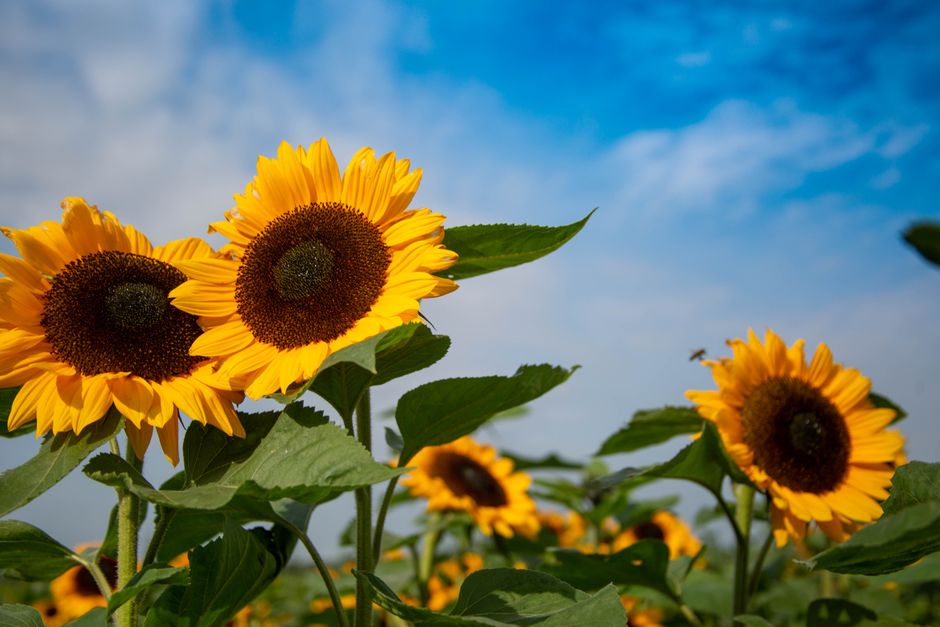
Calendula, zinnias, cosmos, borage and sunflowers are useful options because they provide visible flowers and integrate easily among crops. Choose according to climate, season and available space: a sunflower may be wonderful in a bed and ridiculous in a twenty-centimeter pot.
Herbs also have plenty to offer when allowed to bloom. Rosemary, thyme, oregano, cilantro, fennel and basil produce flowers visited by many insects. That basil you were about to remove because it started flowering can have a second life as a small pollinator café.
If possible, combine flowers with different shapes and blooming times. This prevents the garden from offering all its food during only two weeks of spring. Native plants adapted to your region can also be especially valuable to local wildlife.
A little disorder can help too
Biodiversity does not require everything to look perfectly groomed. A corner with dry leaves, a few hollow stems left after flowering or a safe shallow water source can provide resources and shelter.
In small spaces, distribute flowers among vegetables or place pots around them. In a larger bed, create several small groups instead of putting every flower at one end. The idea is to keep resources near the crops and avoid turning the garden into one long row of a single species.
And stop treating every small hole in a leaf as an emergency. Observe first. Damage is often minor and the plant continues growing perfectly well. That minute before intervening may let you discover who is eating whom.
Protect the insects you want to attract
If you invite pollinators and predators into the garden, be careful with broad-spectrum insecticides. Even some products accepted in organic growing can affect organisms that were not the target. Identify the problem before applying anything and decide whether intervention is really necessary.
Simple actions help: avoid spraying open flowers, offer shallow water with stones where insects can land, maintain flowering areas and do not remove every wild corner the moment it appears.
Then comes the most entertaining part: watching. A flower that looked empty yesterday may hold a pollen-covered bee today, a hoverfly suspended in the air or a ladybug walking along an aphid-covered stem.
A biodiverse garden is not a perfect garden. It has chewed leaves, unfamiliar bugs and moments of disorder. But it is also more alive. Once you begin recognizing its visitors, growing food stops being only about vegetables: you start watching a small ecosystem change every day.
Related Articles
Why You Should Grow Sunflowers in Your Garden
Sunflowers add height, flowers, seeds and visitors to the garden. Learn when to sow them and how to enjoy their whole cycle.

Why Growing Plants Together Can Improve Your Garden and Protect the Soil
Combining crops can help use space, cover soil and add diversity. Learn what to consider and how the milpa system works.

How to grow round summer squash and zucchini: soil, flowers and harvest
Round summer squash or zucchini: learn what they need to grow well, why their flowers matter and how zinnias can bring pollinators into the garden.
Marigolds in Your Garden: More Than Yellow Flowers, They're Crop Allies
Marigolds attract pollinators and may help manage some nematodes. Learn what they really do and how to grow them in garden beds or containers.