I knew the earth would bring me prosperity
A story of vegetable gardens, pots, learning and discovering prosperity in the earth.
There were always plants at my grandmothers’ homes. Lots of plants. There were cherry tomatoes coming out of our ears, green beans they no longer knew where to put, and a grapevine that was mine alone.
As a child, I did not think much about any of it. It was part of life. Plants grew, someone harvested, and there was always something around the house. I wandered among the plants, playing or doing whatever else. I do not remember having any special passion for gardening. I liked it, of course, but it was not something I paid much attention to.
Many years later, living in Buenos Aires city, I had a very simple experience that made me see things differently.
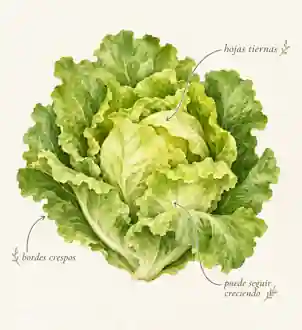
A lettuce in a pot.
It sounds silly, doesn’t it? After all, people have grown food for thousands of years. We know that. But knowing it is one thing; understanding it with a lettuce growing in a pot right in front of your eyes is quite another.
Because you grew that lettuce.
And it does not matter if it is not perfect, if it does not have the ideal shape or color. It is your lettuce. It is about having done something with the earth, having taken part with your own hands in that extraordinary exchange where a seed becomes food.
And then harvesting it. Bringing it to the table. Sharing it.
There is something in that experience unlike anything you can buy.
From then on, I began looking at spaces differently. A corner where the sun reached, a large enough pot, a little patch of terrace. The same question kept appearing: could I plant a lettuce here?
Over time, those pots began to multiply.
I ended up with a vegetable garden on a terrace just three by three meters. Two pallets lay on the floor, surrounded by pots of every size. Big, small, wide, made of concrete. I had arranged them in a sort of U, like the edges of a garden bed. It was my way of organizing the space and making use of every corner.
And everything grew.
I even had a lemon verbena that looked like a little tree, with branches reaching above my head. And a guaco I had brought from my great-grandmother’s home, a plant traditionally used in Uruguay to make homemade throat remedies.
That guaco grew astonishingly. Later I lost it and never managed to find another. I still remember it.
The curious thing is that, while all of this was happening, I was learning.
Then came courses, design, reading, lots of YouTube, visiting nurseries, getting to know vegetable gardens and, above all, practice. Practicing and practicing. I had caught the plant bug and wanted to know more and more.
Because when you really like something, you give it extraordinary attention.
You look at a lettuce leaf and notice its size has changed, its color is different, it looked one way yesterday and another today. It seems as though you are not doing anything special, but you are learning.
And you learn so much that sometimes you do not even know when that knowledge became yours.
That happened to me quite a lot.
When I finally had the chance to build a bigger vegetable garden, directly in the ground, I had already spent years growing, experimenting and observing.
I had no doubt it would work.
And I was not particularly interested in doing things by halves.
I am quite meticulous. The sort who examines every last detail, as we say around here. So I prepared my beds very carefully, thinking not only about what I wanted to harvest, but also about how I wanted that soil to function over time.
Because one thing was very clear to me: I did not want to depend forever on buying bag after bag of growing medium to maintain a vegetable garden.
I wanted rich soil, with good structure, capable of supporting successive growing seasons. Soil that improved over the years and offered plants good conditions to develop.
And then that first season arrived.
The garden was wonderful.
Suddenly there were plants everywhere, abundant harvests and that extraordinary feeling that something was always growing.
And, of course, I wanted to plant everything.
I think that when a garden starts producing well, it is very easy to go overboard. You want to use every corner, try another species, sow a little more. Before you know it, you no longer know where to put all those plants.
But that is part of what I like about growing.
A vegetable garden is constantly moving. You sow, it germinates, grows, you harvest and sow again. It is never exactly as it was the week before.
And when that movement works, when harvests follow one another, the satisfaction is enormous.
Eating what I grow makes me very happy.
I loved it then and I still love it now. Going out to gather a few leaves for a meal, harvesting something you sowed weeks earlier, discovering that a plant produced much more than you expected.
Over time, I learned that a good vegetable garden takes much more than enthusiasm. But I also believe that enthusiasm has a great deal to do with everything we manage to learn.
That first season was abundant, yes. But above all, it confirmed something I had been thinking for a long time.
I knew the earth would bring me prosperity.
And there I was, harvesting.
Natalia Rocha
NNRG
Related Articles
How to keep your lettuce tender through spring and summer
Is your lettuce turning tough or bitter? Learn how to water it, protect it from heat and harvest a little at a time.
Which plants should not share the same pot
Want to combine several plants in one pot? Learn which can share a space and which are better kept apart because of their water, light and growth needs.