How to Grow Squash in Small Patios and Balconies with Supports or Containers
Squash in a small space? Choose the right variety, give it a large container or sturdy support, and make the most of vertical growth.
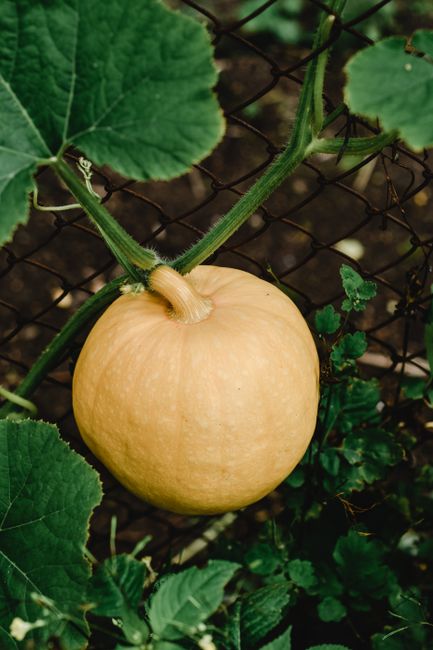
A squash plant does not look like the most logical candidate for a balcony. Some send out vines several meters long and, left to make their own decisions, may try to conquer the neighboring bed, a chair and probably part of the walkway.
But “squash” includes varieties with very different habits and sizes. Choose a suitable one, give it plenty of soil volume and use vertical space, and it can be grown in small patios and even some balconies.
The trick is not forcing a huge plant into a tiny pot. It is choosing well from the beginning.
First choose a variety that fits your space
Some squash have long trailing vines, while others are more compact or bushy. For a small space, a compact variety usually makes life much easier.
Fruit size matters too. A strong vertical structure can support some small- or medium-fruited varieties. A giant squash hanging over a balcony, on the other hand, stops looking like gardening and begins to resemble civil engineering.
Before buying seeds, check how that variety grows and how much room it needs. That information is worth more than any later trick for containing it.
All squash need plenty of sun to produce well. Choose the brightest place available, ideally with several hours of direct sunlight.
In containers, size really matters
Squash are vigorous plants and use plenty of water and nutrients during the season. They therefore need large containers. For container-suitable varieties, think in terms of several dozen liters; around 40 or 50 liters can be an initial reference, although very vigorous varieties may need even more.
The container must drain well. Fill it with a fertile, airy mix enriched with mature compost. Mulch on the surface can help slow moisture loss during hot days.
On a balcony there is another, less glamorous issue: weight. A large container full of wet growing medium is very heavy. Before building a miniature squash farm above ground level, make sure the location can safely support the load and that drainage will not turn the neighbor’s balcony into a waterfall.
Train the vines upward
Vining varieties can be trained on a strong structure. Heavy mesh, a trellis or a pergola can use a wall or vertical plane instead of surrendering all the floor space.
Install the support early. As vines begin to grow, guide them carefully and tie them if necessary without constricting the stems.
Heavy fruits may need an individual sling or net that spreads their weight and transfers it to the support. The material should allow the fruit to keep growing and should not trap water around it.
The entire structure must handle the plant, leaves, fruit, wind and extra weight after rain. Vertical squash is beautiful; a collapsed trellis on top of the other pots, considerably less so.
Water, nutrients and flowers on the way to harvest
Even in a large container, soil can dry quickly once the plant is mature and weather turns hot. Check moisture and water deeply when needed, aiming for reasonable consistency without leaving the mix waterlogged.
Squash are demanding crops. Compost added at planting can be supplemented during growth with an appropriate fertilizer used according to its directions. More is not always better: too much nutrition, especially nitrogen, can produce a spectacularly green plant without necessarily producing more fruit.
Squash produce separate male and female flowers on the same plant. Early on it is common to see many male flowers and wonder where the squash are. Female flowers have a small swollen structure behind them and need pollen for the fruit to continue developing.
Where pollinating insects are scarce, hand pollination can be done by transferring pollen from an open male flower to an open female flower. It is simple and also a good excuse to inspect what is happening on the plant.
Growing squash in a small space is not about pretending it is a small plant. It is about working with the way it grows: choose a sensible variety, provide room for roots, sun and water, and give the vines a structure that takes them where you want them to go. If all goes well, a few months later you may have a squash growing in a place where it once seemed impossible to fit one.
Related Articles

When and How to Sow Parsley at Home
A guide to sowing parsley directly in spring or autumn, or using seedlings. Covers ideal light, soil, and watering for home cultivation.

How to grow round summer squash and zucchini: soil, flowers and harvest
Round summer squash or zucchini: learn what they need to grow well, why their flowers matter and how zinnias can bring pollinators into the garden.
Homegrown Lettuce Cultivation: Basic Steps for Fresh Greens
A guide to growing lettuce at home, covering site selection, soil, planting, watering, and harvesting.

Why Growing Plants Together Can Improve Your Garden and Protect the Soil
Combining crops can help use space, cover soil and add diversity. Learn what to consider and how the milpa system works.